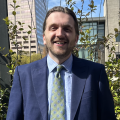
I could not be more honored and excited to be joining Street Roots. No institution has shaped my life more. The opportunity to repay some of the personal debts I owe the paper is truly a blessing.
I’ll share a little bit below about how I ended up here and what I plan to do. But first, please reach out anytime with:
- Story tips
- Revealing internal documents
- Your candid thoughts on my stories
Reach me via Signal at henry.3210 and via email at henry@streetroots.org.
I will protect your confidentiality.
My path to Street Roots
Back in early 2017, I was a student at Portland Community College. At that time, I was singularly fixated on understanding what was behind the poverty, police violence and broader misery in the Northeast Portland neighborhood I grew up in, and had also just seen around the U.S. South as well on the Greek Island of Lesbos while volunteering at a refugee camp.

Journalism seemed to be the best path to finding what was behind it all. But, ‘How do I break into the field?’ quickly became the next question. I found the answer when I called Street Roots’ front desk, told them about my work experience in the service industry and asked how I could help. I spent the next 11 months working many Saturday mornings at the front desk and writing crossword puzzle clues.
From PCC, I transferred to a four-year college to complete a degree in history and sociology, interned at the Anti-Eviction Mapping Project and found myself back in Portland by the spring of 2020. I wanted to report, and I knew what I wanted to cover, so I again reached out to Street Roots — this time with my first official story pitch.
I spent the better part of the next two years covering everything from the drivers of COVID-19 racial disparities to people with disabilities stuck in prison despite court orders for Street Roots while its editors schooled me. Then I moved to Washington, D.C. for a job at PBS NewsHour. While there, I pitched and co-produced broadcast stories for the program on topics including the racial disparities driving a projected surge in U.S. heart disease rates and the future of military recruiting as the Department of Defense struggled to attract an increasingly skeptical Gen Z.
Next, I covered rural health in the Shenandoah Valley for two NPR stations. I used leaked documents to expose huge cuts to community health worker programs, and investigated how a pattern of maternity care service cuts by the valley’s dominant health system was nearly killing mom after mom.
I came back home in 2024 to cover the Columbia River for The Columbian and The Daily News through Washington’s state-funded journalism project. While there, I reported on the impacts of Trump administration policies on salmon recovery, agriculture and the river’s $31 billion shipping economy.
I also did hopeful stories about how Yakama Nation biologists are working to save Pacific lamprey from regional extinction, and depressing stories about the growing risk a ship will collide with Longview’s Lewis and Clark Bridge.
And I investigated who was buying up longtime hunting lands in Wahkiakum and Pacific counties, then shutting down public access. Spoiler alert: I traced $100+ million in purchases back to a web of companies tied to a 21st-century German prince. The whole saga included talk of arson, bulletproof vests, Europe’s richest families and the unthinkable: new timber taxes in Southwest Washington.
Coverage plans
But last Fall, I heard Street Roots would be looking for a new investigative reporter. I began to check the website’s hiring section nearly every day.
Aside from my personal history with Street Roots and everything I owe to the paper, I wanted to work here for the same reason you want to read the paper: It’s the best source for local news if you really want to understand issues.
So, stay tuned for explainers on the policies shaping life around our city, profiles of the people crafting those policies, investigations into the causes of growing regional misery and dispatches from the front lines of communities’ struggles to build a better world themselves.
This article appears in 2016-04-08.